
When programmes need calmness under pressure: meet Chris Duffy
With a compelling combination of strategic judgement and technical rigour, he’s the person you want in the room when decisions matter and programmes need clarity under pressure.
Chris also represents Optima on the Institute for Systems Engineering (IfSE) Advisory Board (UKAB), keeping a finger on the pulse of what “good” looks like across the Systems Engineering discipline whilst collaborating with UK colleagues to develop SE skills and uptake.
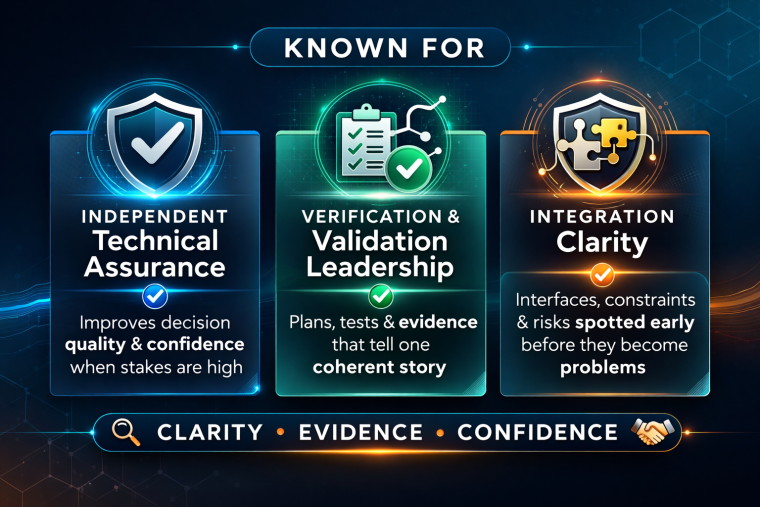
Where Chris adds value
Chris typically steps in at key stages of a programme, from shaping requirements through to proving acceptance evidence, often in an independent “Customer Friend” style role.
Typical outputs of Chris’s work include:
- Technical assurance plans and review packs (design review readiness)
- V&V strategy and evidence structures that stand up to challenge
- Requirements development and traceability approach
- Interface Control Document (ICD) development and integration analysis
- Tender assurance, compliance matrices, and Full Business Case inputs
Chris’s style of work
In his published piece on succeeding with a Customer Friend, Chris describes the behaviours that make independent advisors genuinely valuable: fitting into teams quickly, communicating clearly across stakeholders, operating with discretion and integrity, and bringing pragmatic alternatives when processes slow progress.
Quick-fire Q&A
Q: What’s a common failure mode do you come across with?
A: Very often on projects, interface definition starts drifting out of sync with what different stakeholders actually need. One team assumes the interface works a certain way, another team has built to a different understanding, and nobody realises until integration when it’s expensive and time-consuming to fix. Clear, early communication early on about interfaces (what they do, what they don’t do, and who owns what) can save a lot of pain later.
Q: What do you aim to achieve on “day one” as a consultant?
A: I like to gain an understanding on what success looks like and who’s making which decisions. Then I need to see what already exists: requirements, assumptions, interface info, the V&V thinking. My job is to turn that into a clear path forward, and flag what will bite later if we ignore it now.
Q: What do you enjoy most about this work?
A: I like being the person who helps a team turn complexity into something you can actually steer. No drama, no heroics, just clear decisions, good evidence, and fewer surprises. I also enjoy leaving a legacy: it’s not just about completing the commission successfully, it’s about passing knowledge and experience on to our clients so the capability sticks. The variety keeps it interesting too. Every programme is different, and I’m still learning!
Q: What sets Optima consultants apart in your opinion?
A: I think it’s not what we do, it’s how we conduct ourselves. We prioritise stakeholder engagement: engage early and engage often. Our team are always open to new approaches and committed to continuous learning. We’re not stuck in set ways of thinking, and that matters when you’re trying to solve problems that don’t have obvious answers.
Sound like the kind of support your programme needs?
Whether you’re heading towards a design review, dealing with integration challenges, or need V&V evidence that stands up to scrutiny, contact Optima to discuss how we can help.