

Developing Aviation: meet Rowan
Rowan is Optima’s latest new joiner, bringing a background in defence aerospace and military aviation. He has worked across various UK military aircraft programmes at different stages of the lifecycle, both within industry and on behalf of MOD. With a Mechanical Engineering background and Chartered Engineer status, Rowan brings a broad Systems Engineering skillset and a practical approach to solving complex challenges.
What made you want to become an Engineer?
Growing up in Bristol, aviation was something I’ve always found fascinating. From the Balloon Fiesta and Kite Festival to Concorde and the rich aviation history around Filton, it’s difficult not to be inspired by it.
I really enjoyed physics at college and one day heard a radio advert for Airbus apprenticeships. The rest is history.
The apprenticeship was a fantastic introduction to the industry and gave me experience across everything from practical metalwork skills to complex mechanical engineering analysis. I particularly enjoyed my placements in Filton’s Fuel Systems department, where I even patented an invention for attaching equipment inside fuel tanks.
What is the aircraft you’re most proud to have worked on?
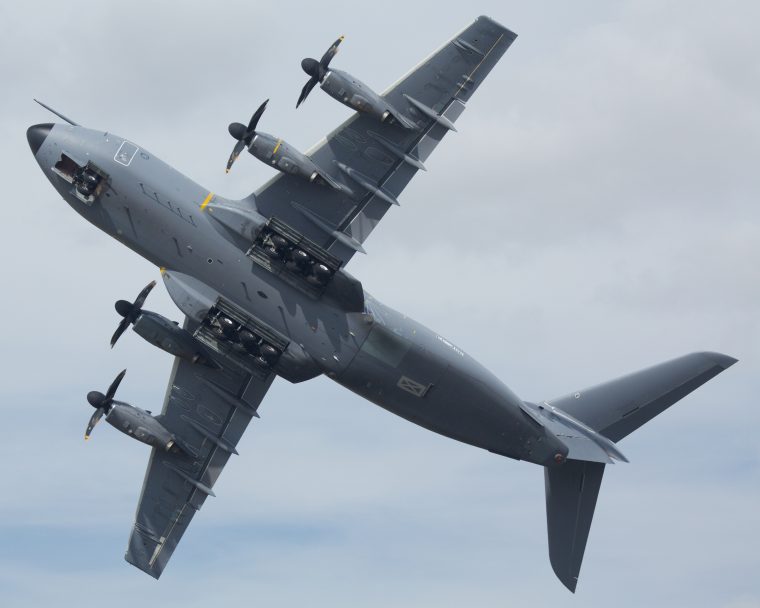
After finishing my apprenticeship, I worked on the A400M’s fuel, inerting and air-to-air refuelling systems.
It was a really interesting programme to be involved in because so much of it was new territory for Airbus at the time. While I had plenty of support around me, there wasn’t always a defined way of doing things. We were often solving problems collaboratively as we went.
I was also lucky enough to carry out on-aircraft ground testing in Seville. Getting hands-on with a large military aircraft at that stage of my career was an amazing experience.
What do you think is the biggest challenge in Defence Aviation today?
The pace at which new technology is evolving has changed aviation on the battlefield dramatically in recent years and it continues to do so.
Small, relatively low-cost remotely piloted aircraft are becoming increasingly widespread and capable. Their range, payload and reliability continue to improve, which creates new and evolving challenges for defence.
Developing effective responses can be difficult when the threat landscape changes so quickly. That’s why taking a flexible and pragmatic approach to Systems Engineering is so important. It helps ensure solutions are developed robustly and effectively, while also reducing development times so programmes can keep pace with evolving threats.
What would you say to people considering Systems Engineering as a career pathway?
It’s incredibly rewarding and I’d definitely encourage people to explore it.
Most people probably already use systems thinking in everyday life without realising it. If you have a routine or process for something, even something simple like emptying the dishwasher, you’re already thinking systematically.
Systems Engineering gives structure to complex problem-solving and helps people tackle difficult challenges in a logical and effective way.
What are you most looking forward to in your role at Optima?
I’m looking forward to working across a broad range of projects and collaborating with people who bring different experiences and perspectives to complex engineering challenges.
One of the things that attracted me to Optima was the balance between deep technical expertise and a practical, adaptable approach to Systems Engineering. I’m excited to continue developing my own skills while contributing to meaningful programmes across Defence and beyond.